Empower Your Health, Every Step
Severe Burns Are Not Just Skin Injuries: What Early Care Determines in the First Weeks
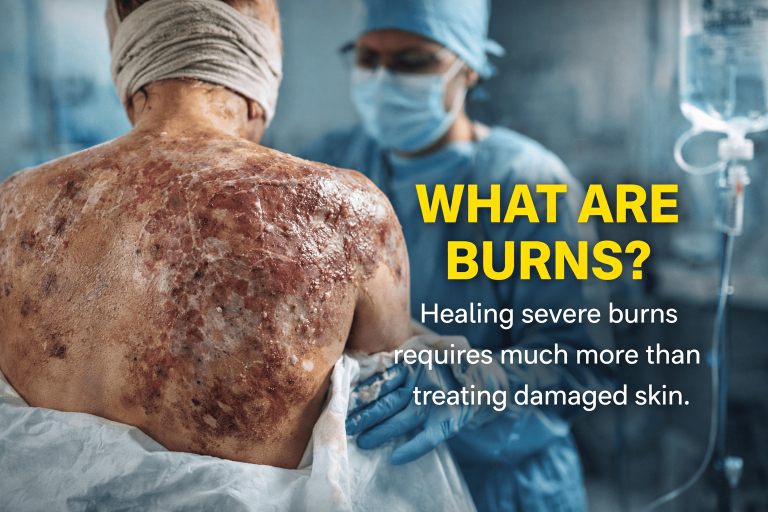
What Are Burns?
A burn is an injury to the skin or other tissues caused by heat, electricity, chemicals, radiation, or friction, resulting in tissue destruction and a local and systemic inflammatory response.
Severe burn injuries are often thought of as damage to the skin alone.
But in reality, burns are complex systemic injuries that affect nearly every organ system in the body. From clinical experience, what happens in the first hours and days after a burn frequently determines long term outcomes far more than the size of the wound itself.
In practice, many patients with major burns do not deteriorate because of burn surface area alone, but because of delayed or inadequate early care.
Why Early Care Matters
After a burn injury, several critical processes begin immediately:
- Significant fluid loss
- Increased risk of infection
- Intense metabolic stress
- Severe pain
When these are not addressed early, complications follow quickly.
One of the most underestimated aspects of burn care is fluid management. Large burns cause major fluid shifts, leading to intravascular volume depletion. Without timely and adequate resuscitation, patients can progress to shock even before visible wound complications appear.
In simple terms, burn patients lose a large amount of fluid. If this lost fluid is not properly replaced, the risk of severe and life threatening complications increases significantly.
Burns and Infection Risk
Infection is another major threat in burn injuries.
The skin is one of the body’s most important protective barriers against harmful organisms. Burns breach this barrier. Whether superficial or deep, burn wounds disrupt the skin’s protective function, creating an open gateway for bacteria.
In low resource settings especially, delayed wound care and limited access to sterile dressings increase the risk of infection and sepsis, which remains a leading cause of death in burn patients.
The Long Term Impact of Burns
Beyond survival, burns can have lasting consequences. These include:
- Contractures
- Chronic pain
- Psychological trauma
- Social stigma
These effects may persist long after the wounds have healed. Outcomes are shaped not only by surgical interventions, but also by early multidisciplinary care, including nutrition, physiotherapy, and patient education.
The Takeaway
Severe burns remind us that medicine is often about timing.
Early recognition, early resuscitation, early wound care, and early rehabilitation all matter. When these principles are applied consistently, outcomes improve dramatically. When they are delayed, even survivable injuries can become life altering.
Burn care is not just about treating wounds. It is about understanding the body’s response to injury and acting early enough to change its trajectory.
For families and caregivers: If you would like to understand how you can support your loved ones recovery and reduce complications after a burn injury, read Caring for a Burn Patient: How Early Family Support Improves Recovery.
Written by Kevin Odo, MD
Empower Your Health, Every Step
Healthducate by Dr Kevin Odo
Meadowable Apple Axis Razor Future
© 2026 All Rights Reserved
Support | Terms | Privacy